Could myofunctional therapy be effective for mouth breathing or tongue thrust? Yes, myofunctional therapy could assist some children in improving tongue, lips, jaw, and facial muscle coordination. The therapy includes simple exercises which are used to develop healthy oral habits. If your child often breathes through the mouth or pushes the tongue forward when swallowing, a dentist in Fairview can check for possible dental or oral concerns. An assessment can also help determine whether myofunctional therapy may be useful alongside other care.
What Is Myofunctional Therapy?
Myofunctional therapy uses simple exercises to help improve the muscles used for breathing, swallowing, chewing, and speaking.
For children, these exercises may help with:
- Keeping the tongue in the right resting position
- Closing the lips properly
- Moving the tongue with better control
- Improving swallowing habits
- Building healthier mouth habits
The exercises are taught step by step based on the child’s needs.
Why Do Some Children Breathe Through Their Mouth?
Mouth breathing can happen for different reasons. It is important to understand the cause rather than simply trying to change the breathing habit.
Possible factors include:
- A blocked or stuffy nose
- Seasonal allergies
- Enlarged tonsils or adenoids
- Nasal congestion
- Certain breathing difficulties
- A habit that continues after an earlier nasal problem
Myofunctional therapy may help with muscle habits, but it does not remove a blocked airway or treat every cause of mouth breathing. A medical assessment may be needed when nasal or breathing problems are suspected.
What Is Tongue Thrust?
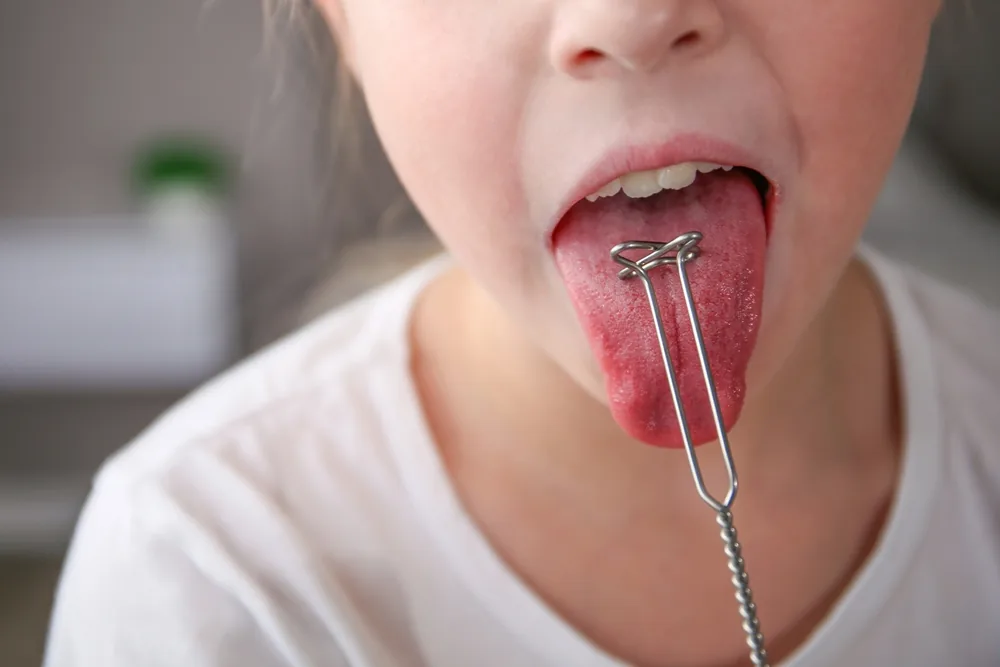
Tongue thrust refers to a swallowing pattern in which the tongue moves forward against or between the teeth instead of resting and moving in a more suitable position.
During early childhood, swallowing patterns naturally change as the mouth develops. If an unusual pattern continues, it may sometimes affect how the teeth come together.
A dentist near you can look at your child’s bite, tongue movement, and tooth position to identify concerns that may need attention.
How Can Myofunctional Therapy Help With Tongue Thrust?
The goal is to help the tongue and nearby muscles work better together. Exercises can help a child learn where to keep the tongue and how to move it when swallowing.
With regular practice, therapy may help with:
- Better tongue control
- Improved lip closure
- More regular swallowing
- Better awareness of tongue and mouth position
- Healthy mouth development
Results can vary because every child grows differently and may have different oral habits or concerns.
Can Myofunctional Therapy Stop Mouth Breathing?
Not always. If mouth breathing is caused by nasal blockage, allergies, enlarged tissues, or another health concern, that underlying issue needs to be addressed.
Myofunctional therapy may be considered when muscle habits or oral posture are part of the problem. In some cases, dental and medical care may work together to address different parts of the concern.
If you notice ongoing mouth breathing, snoring, trouble breathing through the nose, or other unusual habits, a dentist in Fairview can help determine whether further assessment is needed.
What Signs May Suggest a Child Needs an Assessment?
Certain habits may be worth discussing with a dental professional, especially when they continue over time.
Look for signs such as:
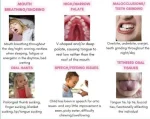
- Frequent mouth breathing
- Lips that often stay apart at rest
- Tongue pushing against or between the teeth
- Difficulty keeping the tongue in a comfortable resting position
- Changes in the way the teeth meet
- Trouble with certain chewing or swallowing patterns
- Frequent dry mouth
These signs do not automatically mean that myofunctional therapy is needed. They provide a reason to have the child’s oral development checked.
What Happens During an Assessment?
A dental assessment may include looking at the teeth, bite, tongue position, lip movement, and swallowing pattern. The child’s medical and dental history may also help identify factors that could affect treatment.
If a dentist near you finds signs that require another type of assessment, a referral to an appropriate healthcare professional may be recommended.
The treatment plan should be based on the child’s specific needs rather than the presence of one habit alone.
How Does Treatment Work for Children?
Children usually need regular practice to learn and maintain new muscle patterns. Exercises should be simple enough to understand and suitable for the child’s age.
Progress may depend on:
- The child’s age and development
- The type of oral habit
- How often exercises are practised
- Any underlying breathing or dental concerns
- Whether other treatments are needed
Consistency matters, but progress does not happen at the same pace for every child.
Ready to Support Your Child’s Healthy Oral Development?
Understanding the reason behind mouth breathing or tongue thrust can help you choose the right next step instead of trying to correct the habit without knowing its cause. Book an appointment with Fairview Dental Clinic to discuss your child’s oral habits, review their dental development, and learn whether further assessment or myofunctional support may be appropriate.
FAQs
Is myofunctional therapy suitable for every child with mouth breathing?
No. Mouth breathing can have several causes. A proper assessment is needed to determine whether muscle training may help or whether another health concern needs attention first.
Can myofunctional therapy correct tongue thrust by itself?
It may help improve tongue movement and swallowing habits, but it may not address every factor affecting the bite. Dental or other professional care may also be needed.
Does mouth breathing always cause dental problems?
No. Mouth breathing does not always cause dental problems. However, breathing through your mouth for a long time may affect oral development in some cases. If it continues, a dental checkup can help identify any concerns.
How long does myofunctional therapy take?
There is no fixed treatment time. The length can depend on the child’s needs, the exercises involved, and how consistently the recommended activities are completed.